Svetoslav TodorovSofiaBIRNApril 3, 202312:00The fifth general election in Bulgaria in two years did not promise an immediate end ot years of political stalemate with no clear winner emerging after 93 per cent of the votes were counted.
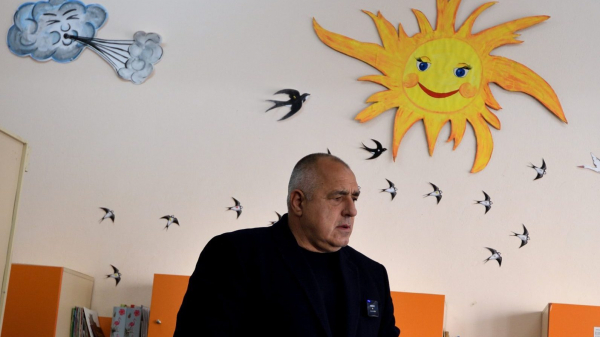
GERB leader Boyko Borissov votes in a polling station in the parliamentary elections in Sofia, Bulgaria, 2 April 2023. Photo: EPA-EFE/VASSIL DONEV
Boyko Borissov’s GERB party looks set to come first in Bulgaria’s latest general election by a tiny margin, latest data from the Central Electorate Commission indicate.
The outcome was a twist, as “We Continue the Change”, led by former PM Kiril Petkov, came first place in Sunday’s exit polls.
But with 93 per cent of the votes processed, on Monday morning GERB and United Democratic Forces were narrowly leading with 26.47 per cent of the votes.
Borissov was Bulgaria’s prime minister for most of the time from 2009 to 2021, until nationwide protests erupted over his government’s role in the country’s rampant corruption.
Petkov’s “We Continue the Change”, running together with Democratic Bulgaria, was just behind on 24.96 per cent.
The far-right pro-Russian Revival party rose to third position with 14.39 per cent, its best result yet, followed by GERB allies the Movement for Rights and Freedoms, the mainly ethnic Turkish party, on 12.96 per cent.
Parliament will also feature the pro-Russian Bulgarian Socialist Party, which polled 8.95 per cent of the vote, and popular singer and former talk show host Slavi Trifonov’s “There Such a People”, which won 4.16 per cent.
Petkov’s alliance won the vote in the capital, Sofia, with 32.06 of the vote, 4 per cent ahead of GERB.
According to Alpha Research, turnout was a low 40.5 per cent, indicating voter fatigue with successive elections. These were the fifth general elections in Bulgaria since 2021, and the sixth election in total, counting the last presidential race.
However, the turnout was slightly higher than in the previous general election, held last October, when it was 39.41 per cent.
Claims that the pro-Russian and anti-Western far-right Revival party had reached its peak proved untrue. The party has clearly strengthened its base since championing anti-vaccination rhetoric in 2021 and a more recent campaign demanding a referendum on the adoption of the euro.
“I’m thankful to all of those who chose freedom,” leader Kostadin Kostadinov said on TV on Sunday night.
He reconfirmed that the only cabinet it will support is a one in which Revival is the mandate holder. “We’re ready to offer a cabinet when we become the first power in the next elections,” he said.
Revival, which has has been accused of intimidation of critical journalists, created a controversy in the election after a Bulgarian National Television reporter and popular YouTuber, Tsveta (Flora) Stratieva, was forcefully ejected from a party public event – drawing a reaction from the Association of European Journalists-Bulgaria, but not from the television station.
The election result reconfirmed current divisions in the Bulgarian political scene and does not promise an obvious end to years of political stalemate.
There are, however, some expectations that GERB and “We Continue the Change” might reach a compromise to limit the influence of the pro-Kremlin President Rumen Radev, who since the beginning of the stalemate, has expanded his influence through his series of interim cabinets, essentially opposing the government and the parliament.
However, the two parties remain at odds. In terms of party presence, the new parliament will look identical to the one which started with Petkov’s rise in October 2021.
Another surprise has been that “There’s Such a People”, the party led by popular singer and entertainer Slavi Trifonov, crossed the 4-per-cent threshold and will enter the parliament.
The anti-establishment party, winner of the July 2021 elections, part of Petkov’s short lived coalition – and essentially the reason for the cabinet’s ousting after moving to GERB’s sphere and contributing to a no-confidence vote – had previously experienced internal conflicts and a loss of voters.
The electoral process, in which voters cast ballots using a paper ballot or machine voting, was married by difficulties.
On Sunday, authorities stated that over 144 people had arrested for fraudulent voting charges while there were over 756 reports of irregularities.
Source link: balkaninsight.com