Vuk TesijaOsijekBIRNMarch 20, 202316:10A Croatian court convicted former Yugoslav intelligence chief Aleksandar Vasiljevic in absentia of establishing prison camps where detainees were tortured and killed during the Croatian war in 1991.
This post is also available in this language: Shqip Bos/Hrv/Srp
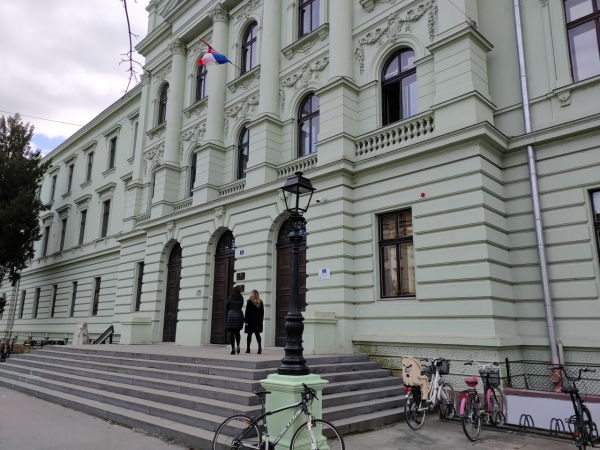
Osijek County Court. Photo: Vuk Tesija.
Osijek County Court on Monday sentenced Aleksandar Vasiljevic, the former head of the Yugoslav People’s Army’s Counterintelligence Service, to 20 years in prison in his absence for war crimes against Croatian civilians and prisoners of war held in camps in Serbia and Croatia in 1991.
The court found that Vasiljevic committed the crimes as the head of the Security Directorate of the then Yugoslavian Federal Secretariat for National Defence, SSNO, during the war in Croatia.
Under a SSNO order signed on October 10, 1991, camps for prisoners of war were established Begejci, Stajicevo, Sremska Mitrovica, Nis and Stara Gradiska in Serbia. A total of 19 Croatian detainees were killed in the camps, the court found.
A larger number of detained civilians and prisoners of war suffered severe and life-threatening injuries, with permanent damage to their health, while several women systematically raped and sexually abused, according to the prosecution.
Explaining the verdict, presiding judge Zvonko Vrban said that the evidence showed that Vasiljevic ordered that the camps be set up in Serbia, and that they were managed by his subordinates from the State Security Service, although officially the camp commanders were from the Yugoslav People’s Army.
“Detainees were physically and mentally tortured and abused in the camps on a daily basis, through interrogations conducted by members of the Serbian State Security Service, which Vasiljevic knew, but did not prevent, nor did he ensure adequate conditions for the lives of the prisoners; therefore, in such inhumane conditions of daily abuse, 19 detainees were killed, and the health of a large number of people was damaged,” said judge Vrban.
He said that the representatives of the Croatian authorities who negotiated the release of prisoners from the camps in Serbia, said in witness statements that Vasiljevic was the main person with whom such releases were agreed, and that he was familiar with the conditions in the camps because he visited them in December 1991.
The prosecution had argued that Vasiljevic knew that his subordinates, as well as members of other units, were killing and torturing detainees and treating detained civilians and prisoners of war inhumanely, but he did nothing to stop this or punish the perpetrators, thus effectively condoning the crimes.
The International Criminal Tribunal for the Former Yugoslavia named Vasiljevic as a co-perpetrator in the indictment of Yugoslav President Slobodan Milosevic for crimes committed in Croatia, but Vasiljevic was not indicted himself.
Source link: balkaninsight.com