Lamija GreboSarajevoBIRNJune 26, 202317:09A ceremony was held to mark the 30th anniversary of the killing of seven young people and children in an artillery attack on Bakarevica Street in Sarajevo while the city was besieged by Bosnian Serb forces.
This post is also available in this language: Shqip Bos/Hrv/Srp
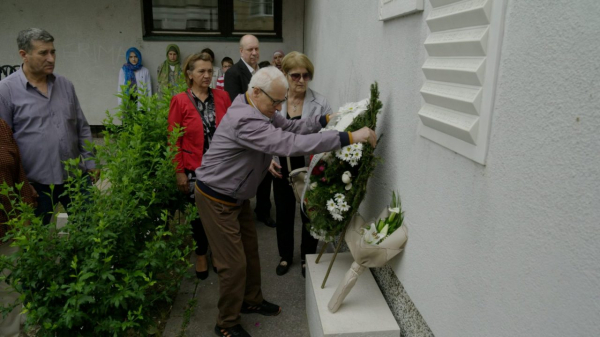
The commemoration in Bakarevica Street. Photo: BIRN.
People gathered to lay flowers and pay their respects on Bakarevica Street in the Bistrik neighbourhood of Sarajevo on Monday, commemorating the 30th anniversary of the deaths of seven young people and children in an artillery attack.
Mersudin Secerovic, whose older brother Sinanudin was killed on June 26, 1993, said that despite the passage of time, “the wounds stay the same”.
Holding his son, who he named after his dead brother, in his arms, Secerovic recalled how he arrived at the scene of the massacre just after the shell hit.
“Had I come just a minute or so earlier after having attended the afternoon prayer, had I left the mosque only a minute earlier, I would have probably not been alive today,” he said.
Fikret Grabovica, the head of the Association of Parents of Children Killed in the Siege of Sarajevo from 1992 to 1995, said it was “shameful” that the perpetrators have not yet been punished by the Bosnian courts.
“The knowledge that justice has still not been done, even to the slightest degree, is very hard for us, because as we know, the Prosecution of Bosnia and Herzegovina has never initiated and filed a single indictment for such monstrous crimes against young people during the siege of the city,”
Secerovic said that hopes for justice are fading, saying that he thought that the perpetrators couldn’t sleep in peace.
“It is not simple, you know, to kill a child. I don’t know what kind of a person can do that, no matter how much they hate someone,” he said.
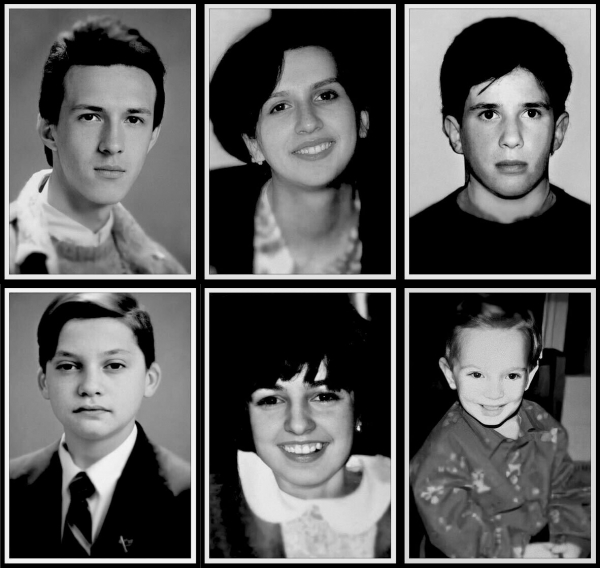
Six victims of the Bakarevica Street attack. Photos: Sniper Alley Photo.
The International Criminal Tribunal for the Former Yugoslavia established that during the 1992-95 war, the civilian population of Sarajevo civilians was attacked by artillery and sniper fire while shopping at markets, tending gardens, cleaning the streets, attending funerals, driving ambulances and riding trams, buses and riding.
Bosnian Serb political and military leaders of Radovan Karadzic and Ratko Mladic, as well as wartime commander of the Sarajevo-Romanija Corps of the Bosnian Serb Army, Stanislav Galic, were sentenced to life in prison for terrorising the civilian population of Sarajevo with sniper and artillery attacks during the siege. Another wartime commander of the Sarajevo-Romanija Corps, Dragomir Milosevic, was also sentenced to 29 years in prison.
During the 44-month siege of the capital, more than 11,000 citizens were killed, including about 1,600 children.
Source link: balkaninsight.com