Nicholas WatsonPragueBIRNJune 6, 202317:17Another six CEE countries made it into the top-10 list of countries where the largest number of investigations were opened.
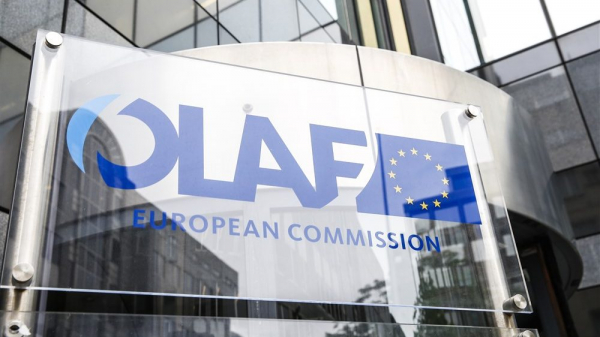
A general view of the European Anti-Fraud Office (OLAF) headquarters in Brussels, Belgium. EPA/JULIEN WARNAND
The European Anti-Fraud Office (OLAF) opened 192 investigations into fraud and corruption involving EU funds last year, with Hungary leading the list of EU member states with a total of 15 probes and another six CEE countries making it into the top 10, according to the agency’s annual report published on Tuesday.
In 2022, OLAF recommended the recovery of over 426 million euros to the EU budget, down from the 527 million euros recommended the previous year, and said it prevented 198 million euros from being misappropriated or unduly spent. Some 256 cases were concluded, up from 212 the previous year, as the agency said it began to investigate the first cases into expenditure fraud connected to the post-pandemic Recovery and Resilience Facility (RRF), which will have a future investment volume of over 720 billion euros.
“Of course, I cannot speak about expenditure without mentioning the Recovery and Resilience Facility. As EU expenditure expanded, so too did our operations and the key priority for us in 2022 was early detection and we started investigating our first cases,” said Joanna Krzeminska-Vamvaka, director of Directorate A – Expenditure – Operations and Investigations.
The appearance of Hungary at the top of the list will do nothing to help that country unfreeze the billions in EU funds the European Commission has held back over concerns about the rule of law and corruption in the country. The EU Commission has refused to approve the country’s RRF program worth 5.8 billion euros, ruling such funds can only be released if the government of Viktor Orban implements a comprehensive reform of its judicial system.
OLAF cited the fraud case at a waste management facility in Hungary, which for confidentiality reasons cannot be named, where a series of errors and mismanagement were identified which eventually led to the destruction of the centre by a fire. A recommendation was sent to the EU Commission to recover 11 million euros.
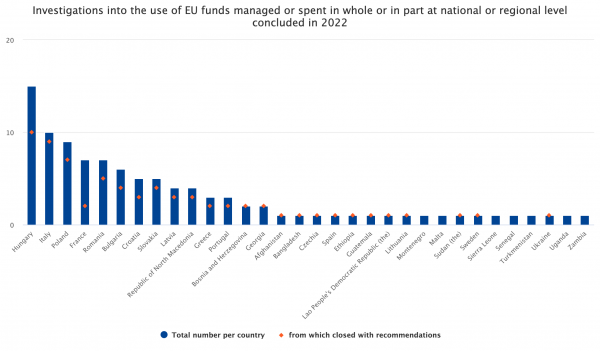
Hungary pushed Italy into second spot in the number of investigations launched, while Poland was in third place with nine investigations, of which seven were closed with a recommendation. There are four recommendations issued by OLAF: financial, judicial, disciplinary and administrative. Hungary and Poland were joined in the top 10 by another six CEE countries, including Romania, Bulgaria, Croatia and Slovakia.
OLAF said it was also kept busy last year by investigating the breaking of sanctions against Russia and Belarus, as well as monitoring the billions of EU funds going to Ukraine.
This was also the first full year that the European Public Prosecutor’s Office (EPPO) has been in operation, which is an independent public prosecution office of the EU made up of prosecutors from member states and is responsible for investigating, prosecuting and bringing to judgment crimes against the financial interests of the EU. In 2022, 71 cases were referred to EPPO by OLAF, resulting in 42 criminal investigations.
Source link: balkaninsight.com