Milos DamnjanovicBIRNApril 28, 202310:39Elections are, as usual, a potential source of friction in the region, but few would have banked on ‘culture clubs’ becoming a source of tensions in the region.
Rising Star
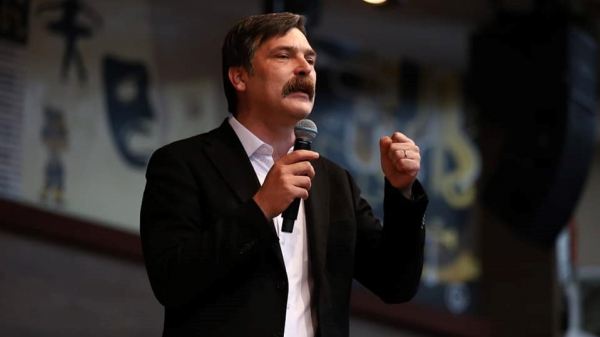
Erkan Bas. Photo: Workers’ Party of Turkey, TIP.
With just over two weeks to go until the Turkish Presidential and Parliamentary elections, the electoral race is getting heated. Understandably, attention is focused on President Recep Tayyip Erdogan and his AKP on the one hand, and his biggest rivals, Kemal Kilicdaroglu and the alliance around the opposition CHP.
Yet beyond this, there are some other parties and individuals worth keeping an eye on. One is Erkan Bas of the Workers Party of Turkey. The child of Bosniak migrants from Serbia’s Sandzak region, he is showing potential of leading a revival on the Turkish left. We take a look at the man and his politics.
Read more: Erkan Bas: Bosniak Migrants’ Son Eyes Leading Revived Turkish Left (April 24, 2023)
Strike
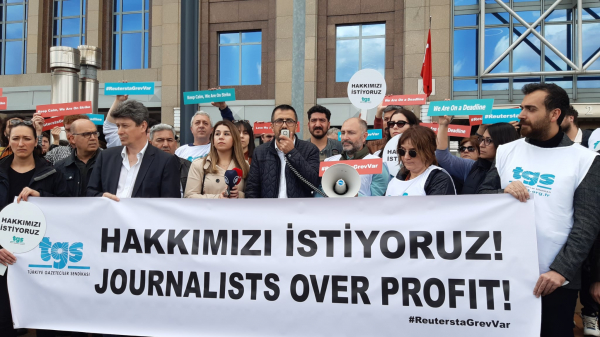
Journalists’ Union of Turkey, TGS and Reuters journalists announce their strike decision. Photo: TGS
Meanwhile, as the days are counted down to the Turkish parliamentary and presidential elections, journalists from AFP and Reuters are threatening to go on strike. The reason is a failure of negotiations with management over pay increases amidst rampant inflation and soaring living costs in the country.
While the planned strike is perhaps not a surprising culmination of the long running dispute, it comes at a worrying time. With few independent media outlets left in Turkey, the strike could leave local and international audiences even more in the dark about the course of the elections than would otherwise be the case.
Read more: Journalists’ Strike Ahead of Turkish Elections Raises Information Concerns (April 27, 2023)
Sensitive Election
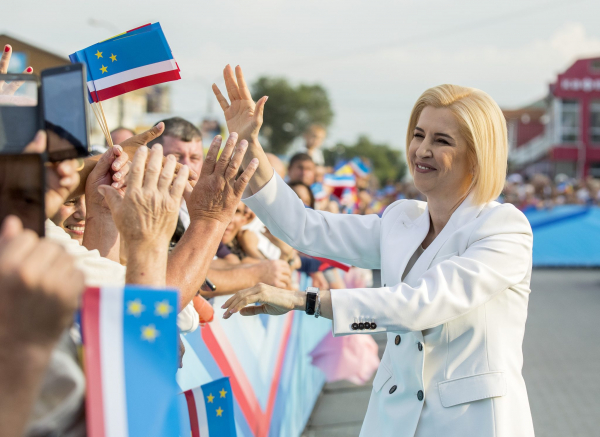
Irina Vlah the appointed Governor of the Gagauzian Autonomy of Moldova (Bashkan), shakes the hands of her supporters during inauguration ceremony, in Comrat city, 112 km South of Chisinau, Moldova, 19 July 2019.Irina Vlah won the second mandate, been supported by Socialist Party of Moldova and from the Russian Federation, took more than 92 percent of the votes during elections in the autonomous territorial unit of Gagauzia. EPA-EFE/DUMITRU DORU
This coming Sunday, voters in Moldova’s Autonomous Territorial Unit of Gagauzia will head to the polls to elect their region’s governor. Normally, Gagauzia – with its Turkic-speaking, but heavily Russified and Eastern Orthodox adhering population – would not be a subject of interest of anyone other than those with a keen interest in quirky corners of eastern Europe.
Yet in the aftermath of the Russian invasion of Ukraine, the elections have taken on an added significance. With its strongly pro-Russian population, the prospect of Gagauzia electing a pro-Russian governor, who would be at loggerheads with Moldova’s pro-European government, is causing alarm not just in Chisinau, but among Ukraine’s other Western allies and backers.
Read more: Election in Gagauzia Has Potential to Undermine Moldova’s Stability (April 25, 2023)
Historical Baggage
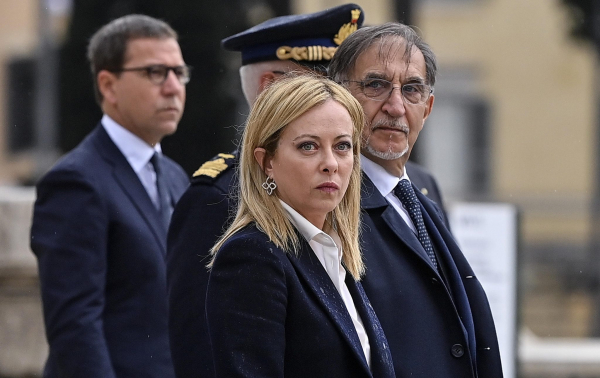
Italian PM Giorgia Meloni (L), flanked by President of the Senate Ignazio La Russa (R), attends a ceremony at the Altar of the Fatherland marking the celebration of the Day of National Unity and the Day of the Armed Forces, in Rome, Italy, 04 November 2022. EPA-EFE/RICCARDO ANTIMIANI
This week, Italy marked its annual Liberation Day on April 25, marking the victory of the Italian resistance movement against Nazi Germany and its Italian allies in the Second World War. Yet the presence of Giorgia Meloni, Italy’s Prime Minister from the far-right Brothers of Italy, gave events an unusual touch.
Many in Italy see the roots of the Brothers of Italy in the post-World War Two wreckage of Italian Fascism. For her part, Meloni has described talk of such links as ‘garbage’. However, many in Italy would disagree. We take a hard look at these links and how they interact with the Liberation Day celebrations.
Read more: Italy Marks Fascism’s Fall under Party with Roots in its Wreckage (April 25, 2023)
Culture Clubs
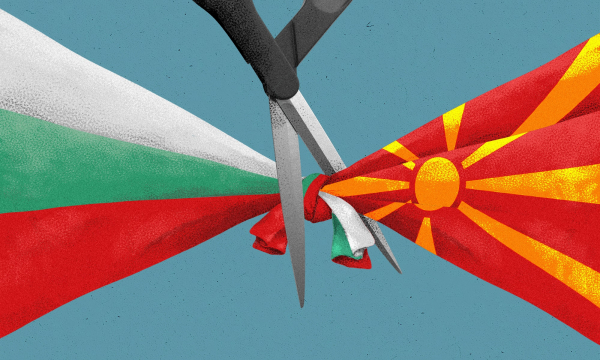
Illustration by BIRN
Under normal circumstances, anything with the term ‘culture club’ in its name would imply a fairly benign organization. Yet Bulgaria and North Macedonia are living proof that ‘culture clubs’ can become a point of heated tensions, even deteriorating bilateral relations.
Over the last year or two, two Bulgarian ‘culture clubs’ have opened in North Macedonia and one Macedonian culture club has opened in Bulgaria. Yet rather than catering to the cultural needs of their respective minorities, a BIRN investigation demonstrates how these culture clubs – with a minimal amount of work and money – have helped to pour fuel onto the fire of difficult bilateral relations between the two countries.
Read more: Culture Club: Little Money Goes Long Way in Stirring Sofia-Skopje Tensions (April 26, 2023)
Mixed Reactions
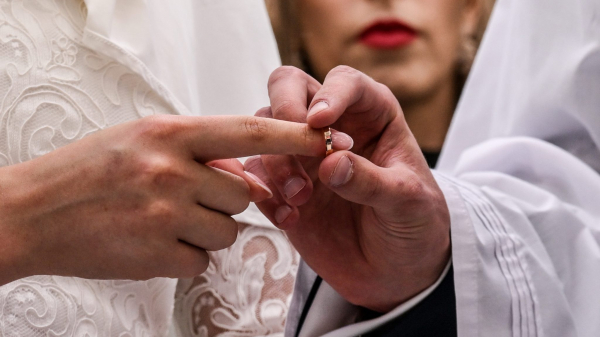
Illustration. Photo: EPA-EFE/FILIP SINGER
Over the last two decades, Montenegro has come a long way in building a more tolerant and ethnically inclusive society. Yet despite the country’s proclaimed multi-ethnicity, mixed marriages still often run into hostility.
Our report takes a look at how individuals and society have reacted to mixed marriages in the country. As in much of the former Yugoslav space, there has been a marked declines in the number of marriages between members of different communities since the common state disintegrated.
Read more: In Multi-Cultural Montenegro, Mixed Marriage Remains a Challenge (April 26, 2023)
Source link: balkaninsight.com