Svetoslav TodorovSofiaBIRNJanuary 19, 202314:05The CoE’s anti-corruption body has issued a critical report on Bulgaria, lambasting an ineffective justice system and the absence of any real monitoring of officials’ assets.
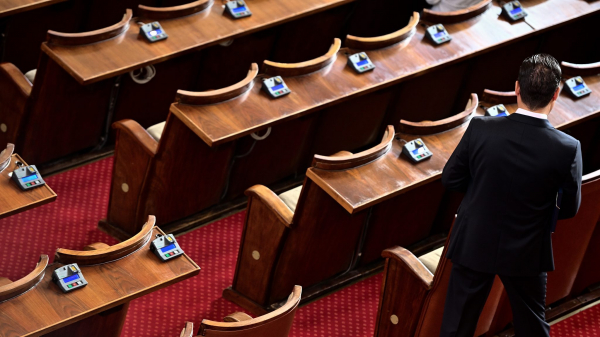
A deputy enters the plenary hall of parliament in Sofia, 19 October 2022. Photo: EPA-EFE/VASSIL DONEV
The Group of States against Corruption, GRECO, the Council of Europe’s anti-corruption monitoring body, on Thursday released a critical evaluation report on Bulgaria.
“GRECO notes that top officials of the government are not subject to a proper integrity framework: no code of ethics is applicable to them, no awareness-raising on integrity matters is provided and no mechanism for confidential counselling on ethical issues is in place,” the report stated.
GRECO highlighted the absence of rules and transparency to lobbyists seeking to influence government policies: “GRECO is also concerned about ineffective verification of top officials’ declarations of interest and assets.”
Bulgaria’s judicial system and the relations between executive power and the Prosecution, often questioned by opposition parties, is also underlined: “Another issue of concern is the lack of effectiveness of the criminal justice response to corruption offences involving top government officials.”
The Prosecution, headed by Ivan Geshev, has often been criticised for not taking measures against ex-PM Boyko Borissov’s alleged role in a money laundering scheme in Spain.
It has also been ciritcised for slowness in acting against the police violence against journalists during the 2020-2021 protests against GERB, for having stopped investigating arms dealer Emilyan Gebrev’s possible poisoning with Novichok and has taken to no major actions against the naming of Movement for Rights and Freedoms MP Delyan Peevski, already sanctioned under the Magnitsky Act, in the Pandora Papers.
On Thursday, unrelated to the report, the current interim government, selected by President Radev and headed by his advisor Galab Donev, boasted of six months of government in which it said all challenges were successfully dealt with.
“We found a state whose development was put on pause,” said Donev. “We improved the coordination and communication between institutions, and through our overall activity, we have changed people’s lives for the better,” Donev added.
In August last year, protests erupted against the interim government, which had touted the idea of reinstating deliveries from Gazprom and overturning deals made by ex-PM Kiril Petkov’s pro-Western cabinet. Since then, Donev and his ministers have since toned down their positions but, in chorus with the President, have remained critical of Petkov’s legacy.
Since April 2021, Bulgaria has been in a stalemate which saw the downfall of longtime PM Boyko Borissov’s GERB party, the rise of new forces such as Petkov’s “We Continue the Change” who headed a reformist now-ousted coalition, and a comeback by GERB.
BIRN’s 2023 Looking Forward analysis of Bulgaria said the country faces another turbulent year, with general and mayoral elections ahead.
This cycle of endless elections shows little sign of ending. After GERB and “We Continue the Change” failed to secure partners for a coalition government, the current government-forming mandate is in the hands of the pro-Kremlin Socialist Party, BSP, to which President Radev stays loyal. But the BSP’s chances of forming a government are also minimal, so Bulgarians is expected to vote again this spring.
Source link: balkaninsight.com